

IMAGINATION

Without haste, the warm setting sun is slowly fading on the other side of the bluish mountain where Jupiter’s Temple is standing prominently. Its’ forests, where they revere to worship Julio as god is bringing forth pure fresh air, causing the laurels to generate a vital process of swaying the leaves back and forth, conveying the aromatic scent of sweet perfume carried by the gentle wind in the pleasurable mild heat of the setting sun. The violets began to break each cores in every flowers, standing in their prestigious stature looking up to heaven, while the beautiful magnolia, the flower from India are subtle in color yet strong in appearance, with each buds in luminous ivory color are encompassing its’ gentleness, bowing its’ heads down to the ground. The green Palm trees and Pines are laying out their cool shades in the east side, ready to welcome the coming darkness of the night. The Nightingale’s are hiding, concealing themselves from the luxurious bushes, shaking their tiny wings, wiggling their capricious fickle tails, waiting to be petted, caressed by the gentle wind for the coming dark hours, offering their sweet songs to God Almighty throughout the night.
The shepherds are delivering their meek lamb into their designated corrals, and the diligent farmers are soaked with their hard working perspiration, with specks of dust covered their faces, they are on the cheerful mode on the way home riding the firm back of their cows.
From the highlanders are the Albanian women, surrounded by their beautiful children, sitting under their miserly roofs, inside their huts, singing joyfully with their lovely songs, signifying the coming night, the time for their husband’s to come back home from work. The ship crew stationed in Tiber city are rolling up the canvas of their tents that protects them from the sun’s heat throughout the day. The lively swallows are happily flying around the towering posts where the ship crew ties their sails. From afar, up in the sky will fall to notice a layout in tin color, twinkling in an incredible sight, covered with opal clouds, is where the prestigious Rome stands, the city where its’ name overwhelmed the world, and made some parts of the world a just province. There are approximately hundreds of heathen Temples standing proud in the center of its’ town, showing off its’ dazzling, sparkling shines, bathe with magnificent shimmering light, glistening every day. The tranquility and vanities for admiration weakened the strong arms of their soldiers. The supreme goddesses of Venus (Bhavani) that’s holding strong minds, and with great courage, were put into sleep.
The “Via Appia” they called or the road built by Appius, had become a one bazaar of love and courtship. In such a place can a soldier become a glutton, a party goer, and overindulge themselves through alcohol of intoxication. The poets poems can replace their weapons of destructions, and the sweet perfumes from their shields. This became the famous place for pleasures and past times for the wealthy, the Rome’s Monsieur, the true nests for entertainment and the slaves for fashion in Augustus time. Let us stop first, and let us spend time in this place for a while.
If Appius Claudius Crassus, a Roman Censor, rises from his grave in Augustus time, he may never recognize the 400 years old road he built. It is not the same road anymore, where used to be the passageway for valuable things from Asia and Africa; it is now one of the most affluent town in Rome. In its’ field lined up the magnificent vacation houses, a well built gorgeous palaces, where great graveyards are enhanced, and the proud Mausoleum is aggrandized into an exquisite and impressive burial chamber. The dead’s peaceful sleep, the highly regarded gravels, and the respected cold marbles covering the tombs are ignored by the flirtatious and playful youths. The esteemed Roman statesman, Marcus Tullius Cicero, once states from one of his orations: “The gods and goddesses of Homer turned out to be dumb ever since the humans lost their confidence on them and are no longer consulting them.”
Days gone by in time, and Rome slowly began to mock and ridicule their gods and goddesses. The “Via Appia” way became the marketplace of pleasure and comfort for entertainment. The living are sitting on top of the dead’s ashes, and are talking about love and friendships. The cold stone benches surrounding Scipio’s tomb is not once became like a poet’s school, taught to young men by Publius Ovidius Naso, a poet of love known as the “Ars Amatoria,” (the art of love or sexual love). Women from high societies are dating and meeting men at Appio’s tomb’s bedrock. But before sitting at those semi precious stone benches adorned with golden brocades, they will cover first with their impressive tedious colored hankies, their sitting spots.

This is the place where they wait for their lovers and sweethearts, hangin’ at Marte’s camp, evoking their interests to make their eyes captivating, dreamy and tantalizing. As they are fanning their fan wings to freshens’ the air, they are audibly scenting bottle of sweet perfumes, while laying their heads on a marble tomb. In the meantime, the young lads are strolling through “Via Appia” way riding their horses coming from their nearby towns of Albania, approaching Roman’s fort. Their rowdy, speedy horses from Numidia doesn’t have any problem disturbing the dead’s peaceful rest as they arrive at the graveyard. Cupid pushes their hearts to Venus, exerts force’s to someone’s heart for love is forever selfish. distinguishing hopes from happiness because sweet dreams for affections are lost and forgotten. The “Via Appia” way, is a remarkable place, a trend-setter, where it deliberately causes them to meet at Augustus court to talk about fashions, debating about the pomade’s greasy substance for fashionable stylish hair, or the distinctive aromas of sweet scent perfumes. An exchange analysis of how to beautify the skin and make it supple and soft–discussing the tunic’s width, the weight of the rings, scarves dimensions, and the style for a fashionable shoes. There’s a heated debate for hairstyles, and the beards length, will it be long or short.
In “Via Appia’s” way are the fast chariots made of wicker, and seen running in different directions. Additional classical style of chariots cruising around, are hauled by three horses, adorned with leather, woven with fine leopard skin, and the wheels are clasped with silver. Chariots from France can also be seen roaming around with super quality wheels, with its’ seats embellished with royal purple silk, a scarlet color, especially made for the Patricians, the aristocrats. Here, the matrons or the household mothers sits like an icon, wrapped with their scarlet scarves softly flowing in the air, their long silky hankies are waving in the wind’s natural movement, dragging them to the ground, showing their chubby round arms filled with bracelets. These noble women were deliberately showing off their diamond glittering crowns as they climbed down the stairs of their chariots, where their tiny feet are bare, adorned with tears of Chios (mastic) and violets. Their slaves will immediately spread their long hankies made in France, as they climbed down the stairs, avoiding the dirty, dusty ground. Walking through those shy mimosa pudica of the Tiber, these noblewomen, the beautiful children of love and laziness, will take a few steps, then would lean their hands for support towards the gristly, stringy back of their slaves, displaying their delicate, dainty bodies, like these mistresses are requiring strength and are not able to walk by themselves. An indication of an affluent status in life.
As they sit at those decorated big pillows, prepared for them, these privileged mistresses with their soft, supple hands that mashes and squishes will play catch with their small amber balls. And with its’ accessory tools, these orange spheres will start to spin around as their slaves spray sweet scent perfumes around them to freshen the air.
What a lovely sight to see! People in public garden take pleasure of their surroundings, but Oh! Women are not the only ones who walk frail and delicate, but men too! Those once strong and courageous descendants of the world’s indignant are also seeking their canes to support their now exhausted, and drained energy. One of them is Maecenas, whom we already know. He can’t walk without the help of his two strong slaves beside him. But don’t be amazed if he join, and linger around the impressive meetings of the carefree, the philosopher’s easygoing appearance cloaked with his ruptured clothing. Maecenas watch and observe this philosopher’s conceited and prideful self with public shame, exhibiting his arrogance that’s been seen on earth since the beginning of time. Furthermore are the beggars begging for alms, delighted to mingle around the aristocrats, and the well-dressed noble people scented with their pleasant fragrances. But this kind of illusion, presented to them by the pretentious society, if observed with wisdom by the tattlers farmers, with their pathetic eyes can quickly fade and awaken the actual existence of their reality. They threw coins to the paupers, but they bashed the philosopher with their disdainful smile infused with mockery. After this, will their gaudy happiness diminish like clouds, where their blind gods pushed them to neglect their souls, to gain earth’s satisfaction offered and granted to them to its’ full absolute.
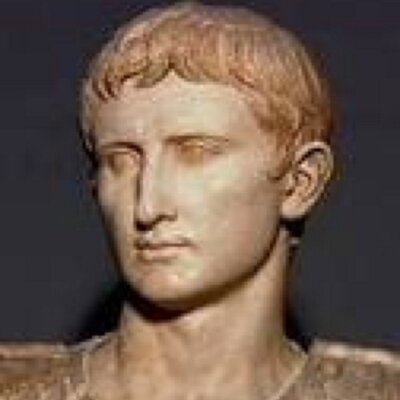
In this situation, will Rome’s good people in high society thus allowed two hours to finally let the sunset completely submerged behind the mountainous west. Allowing their Kingdom to position itself through the night’s governing power, spreading the dark, mournful blanket of the night, spreading smoothly on top of the graves, and to the “Via Appia’s” stunning palaces. When this happens, and as the night falls, subduing the “Via Appia’s” way, the street becomes more like a deserted road, empty and clean.
And once again, the hollowed, deserted Rome will take its’ happy children back to their nesting grounds, in their villages and in their towns. But for some citizens, festivity and merriment are not done yet, for the night is just beginning to unfurl its’ charm. Throughout the night, in Tiber’s city are the clowns from Greece, the dancers from Cadiz Spain, those Gladiators from Africa, the comical Pilde, and Batilo the comedian. The pythons, lions, tigers, leopards, and elephants arriving daily in Rome’s town to entertain the wolve’s lazy children of the fortunate.
The Rome’s successful Emperor, Augustus Octaviano, made a decision to liquefies all his dish wares, with nothing left except the one glass he inherited from his Uncle Julius Caesar, and the 150 million sestertii. He used the money to build theaters, racehorses, and the road called “Via Flaminia.” Augustus sought, and desired to see his country happy and fortunate. This intelligent Emperor, did not have obstacles from any opposition to fulfill and accomplish his wishes. But let us not be so enthusiastic from entering Rome so fast, and let’s stop here for a while in this road called, “Via Appia” way.
The clean and clear night sky, without a trace of clouds hovering around, is divinely calm. As this brilliant and radiant moon continues to ascent in the cloudless night sky, its’ splendor and bright silvery rays are scattering towards the deserted graves, and to the magnificent palaces in “Via Appia” way, where it became a renowned tourist attraction for quite a long time. The incredible complexity of the palaces, built for intricate beauty and inherent value are admired for its’ enchanting elegance.
A woman or perhaps a ghost in a woman shape, is walking gently, taking her small steps to Rome. Her long reddish hair flows softly of her shoulder in the cool night breeze; she is wearing a long black tunic, swiftly caressing her foot as she slowly steps forward. A belt made of steel tightens her waist, her only clothing as she moves inch by inch towards the cold, ghastly night. Crowning her head is the intertwined dead dry leaves, and on her right hand is a cane made of juniper wood, she’s pressing against it for balance. On her left hand is a cut-off rod made of copper, and at the rod’s cut-off end shows five tiny vipers heads. She is treading on, physically exhausted and bone-weary.
She stops for a while, standing still, and from the distance can be viewed her brownish face struck by the moon’s lugubrious light, reflecting her beautiful face but with wild fury. Her eyes are black like the blackest of night, gloomy like remorseful, a restless eyes entombed upon the pit of her eye socket, where she disperses her unceasing, hateful stares that gives warning. Her forehead is broad and proud, her thick lips are red, like a living blood, breathing, quivering in its’ emptiness, her nose is prominent, and in fine shape, giving a sad but a shocking facial appearance.

It is hard to speculate the woman’s age, as she moves slowly in the depth of night, taking her small steps, towards the “Via Appia’s” graveyard. She would lift her eyes once in a while to heaven, opening her lips crying out for vengeance, an intense rage from her chest, releasing her burning anger from within. But after a few seconds her prideful conceit will vanish, like a mysterious force is in command, and punishing her. Then all of a sudden, a loud outcry, a blast of remorse, a gnawing distress is arising from her senses of guilt, then bowing her forehead to the ground, she whispers these words:
—“Oh! gods and goddesses of Gomer from Olympus! Oh! The city’s prophetess of Tiber! The wavy lake of Styx, the Sphinx in Giza, had fallen from its’ pedestal, swallowed by the desert sand. Wretched are we who can’t sit on top of Delphi’s Temple.”
After this, a sad lamentation, the mystical woman had pulled a deep sigh from her chest, then continue to walk. In the same manner had she finally reached the lonely grave, alone beside the road. She walks around this lonely grave, glaring furiously at the tomb, holding the attention as if by a spell, then she sat at the stone bench, and pressed her forehead on the cold marble grave. Suddenly, an intense energetic force touches the grave, and it quickly tremble from within. The distinct touch of this mysterious woman from another land is quite different in nature, the interesting diligent woman with her pure and sad contemplation did not gone by unnoticed, for the ongoing occurrence of great wonders are seen. The deep woefulness of this enigmatic woman and her constant supplication awakened the deep sleep of this soul’s intellectual energy inside this cold marble grave. A deep cold voice coming from within, spoke to her like this:
—“Who is this, that with the power of sorrow and grief had come to disturb the peaceful sleep of death?”
—“It’s me,” the woman replied, as she quickly stood up at the same time, stunned from the voice coming out from within the grave.
—“And who are you?” The voice once more asked.
—“I am from another land, from the hollowed navel of this world, I left behind the sea of Corinth. I am now on foot looking for the proud Rome.” The woman said.
—“So therefore, you are from Greece?” The voice said.
—“I am from Delphi,” the mysterious woman replied.
—“Have you seen Apollo’s oracle? You must have visited the Muse’s Temple?” The voice asked.
—“Yes! But who are you talking to me from the pit of that grave?” The woman’s courageous question.
—“The moon’s powerful silver rays are trancing its’ light across my grave, reflecting the letters on my tombstone. Read it if you know how to read,” the voice replied.
The foreign woman did not hesitate to step in a few strides backwards, to look at what is in the tombstone. Then she read the letters embedded in that cold marble grave. The letters are written in the following words:
“TRAVELERS.
STOP FROM WALKING AND PAY TRIBUTE, TO THE REMAINING ASH OF THE CENSOR, APPIO CLAUDIO CRASSO.
HE HAD THIS ROAD BUILT, WHERE YOU’RE STANDING AT.
AND HE IS ALSO THE ONE WHO HAD BUILT THE WATER GRID THEY CALLED, “THE APPIAN WATER,” FOR ROME’S GRATIFICATION.
THEY BUILT THIS GRAVE IN HIS HONOR, GOODBYE!
YOU SHOULD BE THANKFUL!”
—So, you are Appio the Censor, the one who wrote the well-renowned law, known and called, “The Law of the Twelve Tables?” The astonished woman asked.
—“Do you know if the Romans still obey those commandments?” The voice asked.
—“It is still shown, hanging in the Capitol’s wall until now; your colleagues had those commandments printed in two golden boards.” The woman replied.
—“What year are we in now since Rome was built?” The voice asked once again.
—“We are in the year 752.”
—“So therefore, I am resting now in this grave for 400 years?” The voice said.
—“He is indeed correct!” The woman confirmed.
—“Who is ruling the Roman Republic now?” The more curious voice asked.
—“Well! Rome is no longer a Republic,” the woman’s soft reply.
—“And what do they have now?”
—“Rome is now the Imperial!” The woman said.
—“And the Patrician’s allowed that?” The voice questioned.
—“Of course! For Octaviano Augustus is the Lord and the World’s Emperor!” The woman said.
The grave’s voice ceased for a second, then resumed and talked again like this:
—“Who art thou, who can awaken my ashes and gave my soul a voice? You are blessed and fortunate enough to be the gods and goddesses descendants!”
—“I am they called the Cumaean Sibyl.” The woman points out.
—“The Cumaean Sibyl, the Sibyl of the proud Lucius Tarquinius Superbus? (King). Who came to Rome while rebuilding, digging extensive excavations to erect the Capitol building on top of Tarpeian rock, the former marketplace where they sell the Sibylline books?” The voice decipher.
—“That’s it!”
—“How did you able to gain an extensive long life, and fortunate enough to live in your old age. Does the Parcae did not cut up your life’s thread sooner?” The voice questioned.

—“Yes! I already died,” the woman replied. —“The old Charon had ferried my soul across the river Styx; I visited the cave of death, and I saw three Parcae’s. I saw the god Lahkesis, and burgeoning on her fingers are thousands of fibers, each is the measurement of every human lives lifespan. Next is the god Clotho, who has the authority to decide the human fate, holding the threads of life forever to pick their selected thread from his spinning distaff, an ominous warning for the human’s darkened or hopeful destiny. The goddess Atropas, with tens of her untiring diamond scissors, can decide to choose the humans manner of death and end it by cutting the mortals thread of life. And my unfortunate thread of life had also fell into her unmerciful scissor.”
—“Then why do I hear your voice, if you’ve been dead for quite a long time now?” The voice asked.
—“Oh!” The Sibyl answered while her tears bursts into a sad mourning. —“Themis, the Titan goddess of the divine law and order, commands the Parcae’s daughters to re-attach my life’s string for only a few days, for I am the one to deliver Delphi’s oracles, the last request for the god Apollo, who no longer responding to people’s queries, asking for his advice.
The gods and goddesses of the heathens are shaking, falling, and are pulled from their pedestals, running in haste, to escape and hide in the cave of god Pluto. There, they wept bitterly because they lost their power for the rest of their lives.
The Titans from Mount Caucasus, the proud Prometheus, the god of thieves, had a reputation for being a clever tricksters. He is famous for giving humanity the gift of creating fire and the skills to construct metalworks. For his aggressive action, he was punished by Zeus, who was outraged by Prometheus’s intrusive act, from stealing the fire. The Titan Zeus gave Prometheus eternal punishment by having him taken to the far east of Mount Caucasus. Here, they bound Prometheus into a rock tightly tied by a diamond chain, Zeus then, sent a crow with insatiable appetite to eat Prometheus’s immortal liver. To worsen it, the liver re-grow every night, and the crow returns each day to torment Prometheus endlessly.
Jupiter, King of the gods and humans is restless in his Throne of Ivory, he accidentally dropped the scepter he’s holding, and the lightning burnt his forehead, the eagle folded his wings, and beautiful Hebe, the goddess of youth, cried out incessantly at his foot.
Juno, the goddess of love and marriage, Jupiter’s wife with their children doesn’t want anymore to hear newlyweds’ prayers. Hebe is turning her eyes away from the mothers giving birth to their firstborn child. Minerva, the goddess of wisdom, folded and closed her book of wisdom, and knowledge. Vesta, the virgin goddess of hearth, home, and family was terrified to see her dear light dedicated for her is flickering, and it did went off.
Pallas, the Titan god of the battle and war craft, had his shield destroyed and broken into three pieces. Ceres, with her crown made of buds from plants are coiled around her head, did quickly dried out in no time upon her forehead.

Venus, daughter of love and beauty, is weeping for her beloved Cupid Eros, because of his unfaithfulness. Rhea, the Greek goddess, mother of the gods, had seen the death of her Lions that pulled her chariots, followed by the fall of her tower crown.
Saturn, the god of sowing, with Ouroboros, the snake in his left hand, the eternal cycle of destruction and recreation is no longer a tail-eating serpent, and he is no longer holding a sickle in his right hand.
Diana, a goddess, is primarily considered a countryside’s patroness, the moon goddess, and the hunters goddess, is walking briskly in the forest, sad and lonely, because her bow and arrow are not capable any longer of inflicting severe wounds towards the wild beasts.
Mercury, god of messages and communications had his wings taken out from his head, and he dropped the small pouch he’s holding from his hand.
Marte, the god of war, is defeated by his own fear, while the gorgeous hair of Apollo had turned white overnight, and his resounding lyre had deteriorated. The nine Muses, daughters of Jupiter and Mnemosyne, are running around the mountain of Piraeus, Helicon, and Parnassus, with their uncontrollable wailing, they are crying in pain.”
—“Stop it! Stop it! Ghost from the earth’s darkest pit, the soul from hell, who came with your disgusting words, disturbing the dead’s peaceful sleep!” The voice’s powerful supplication from the grave. —“You have to go now! Let me rest in peace inside this cold marble grave, where my ashes are hidden, and do not rejoice in telling me the fall of the gods and goddesses of Olympus!”
The woman from another land stood up, then she draws a deep sigh from her chest, saddened. Then she began to walk tracing the road to Rome, mumbling to herself the following words:
—“Rest in peace Appio, but if you find your soul wandering around the firmament, up in the sky, the space between heaven and earth, searching, not knowing where to find the grace for forgiveness, which cannot be granted to you by the gods and goddesses of the heathens…………….go to Israel, the promised land. For there, was born the True God, the world’s Savior, the Messiah, prophesied by the Prophets.”
—“And what is the name of that God?” The voice coming from the grave asked.
—“His name is JESUS! He is the Redeemer of the world.” The woman replied.
Then a loud outcry bursts out from inside the grave, a sorrowful lamentation, and the moon’s melancholic light hide behind the bluish, purple clouds, casting its’ gloomy light in its mournful passion in that ghoulish, frightful night. Aesculapius statue, the god of healing, standing on top of Appius Claudius Crassus’s grave fell down the ground, and broke into pieces. The marble grave trembled, and the Cumaean Sibyl bowed her head down to the ground, her body is pressed against the cane she’s holding, then she stood up and began to walk. Tracing the road to Rome, she cried out loud, speaking the following words:
—“Oh! The gods and goddesses of Gomer in Olympus. Oh! The foretellers and the soothsayers of Tiber city! The raging river of Styx, the Sphinx of Giza, all fell from their pedestals, swallowed by the desert dunes. Miserable are we, who cannot sit at the top of Delphi’s Temple, for the True God is born in Israel to redeem the world! The Savior of the human race came down to earth to destroy what the heathens worship! The unbaptized and the pagans!”

 Sapphire Blue Diamond